Bryan William Brickner
  • Blog
  • Interviews
  • Articles
  • Books
  • Photos and Video
  • Links

Thereat: Gus Kotka and Johnny Reb, On Our Way Happy Constitution Day

9/17/2017

0 Comments

 
PictureJohnny Reb and Gus Kotka Thereat Happy


​I of XIII


​
“Here Gus.”
“This is On Our Way Reb.”
“Thereat.”
“Where’s Virginia?”
“There.”
“Ahead of us.”
“Directly.”
“So this is a threshold moment?”
“For We the People.”
“Good for us.”
“Might be what Morgan meant.”
“Our Teamster’s ‘What are you two doing?’ moment?”
“That one.”
“Asking two citizens what the hell they be fighting about.”
“Right.”
“We ‘Mericans.”
“We are.”
“We’re not … what are the people called who take rights not granted in the Constitution?”



PictureJohnny Reb and Gus Kotka Thereat Constitution


​


​“Usurpers.”
“We’re not Usurpecans.”
“Usurpecan: an American citizen who supports the usurpation.”
“That.”
“It’s Constitution Day Gus.”
“Nice: must be about 230 years ‘eh?”
“Yes.”
“We can also call it Smudge Day.”
“That’s right, thanks to George.”
“Did he just tell’em to make the change Johnny, and they made it – changing the ‘forty’ in forty Thousand to ‘thirty’ in thirty Thousand?”
“It was a request.”
“And the vote?”
“Unanimous.”
“Then they made the change and left the smudge.”

PictureJohnny Reb and Gus Kotka Thereat Day


​“Yes.”
“Nice of George to do that.”
“Strengthened We the People.”
“That and leaving us some physical evidence.”
“The smudge is in Washington DC Gus.”
“Okay.”
“Maybe that’s where we go after Berryville?”
“Us in DC: I like your thinking Reb.”
“First though we have to get back to Virginia.”
“Threshold you said.”
“Yes I did.”
“Happy Constitution Day Johnny.”
“Happy Constitution Day Gus.”


*Next Up: Sunday 24 September and Thereat part II, Gus Kotka and Johnny Reb On Our Way ‘Mericans.
 
Posted by Bryan W. Brickner

0 Comments

2020: The Four Orders of Reality in a Baudrillardian Nativity

7/12/2017

0 Comments

 
Picture​The Immaculate Preconception


Simulations, Jean Baudrillard (1983)
Translated by Paul Foss, Paul Patton and Philip Beitchman
“The Precession of Simulacra,” pages 11-12
 
This would be the successive phases of the image:
            -it is the reflection of a basic reality
            -it masks and perverts a basic reality
            -it masks the absence of a basic reality
            -it bears no relation to any reality whatever: it is its own pure simulacrum.
 
In the first case, the image is a good appearance – the representation is of the order of sacrament. In the second, it is an evil appearance – of the order of malefice [evil enchantment]. In the third, it plays at being an appearance – it is of the order of sorcery. In the fourth, it is no longer in the order of appearance at all, but of simulation.
 
Baudrillard was harder to explain before our current political situation: now the first through fourth orders of the image (this is the “I m age” / ego) can be clearly discerned.
 
Imagine “We the People” as an image.
 
Is “We the People” a first order reality, one based on the constitutional representation ratio found in Article 1? Or is “We the People” a simulation of the usurpation and therefore a fake representation?
 
Perhaps the nativity scene is a useful image for understanding Baudrillard’s four orders. To begin with, to understand there is a baby Jesus missing, one has to know of the first order, of a complete Jesus nativity. Take Aspasia or Socrates, for example, individuals living 400 years before Jesus; they would have difficulty imagining the setting; even more difficult, meaning for the bottomless manger, absent baby Jesus and the third wise man represented as an ass. A Socrates might also see the angel more as a guiding spirit, a daemon, more than we allow ourselves to see directing signs and spirits.
 
Baudrillard also noted, to quote in paraphrase, that nostalgia assumes its full meaning when the real is no longer what it used to be.
 
We the People: to be or not to be first or fourth order? – To be constitutionally real or constitutionally fake?
 
The answer is on the horizon we call now.
 
*Next Up: Wednesday 19 July and a 2020: In High Spirits, a Seven-Twenty Preamble.
 
Posted by Bryan W. Brickner
0 Comments

2020: Jesus was poor and said a few things about being rich

7/5/2017

0 Comments

 
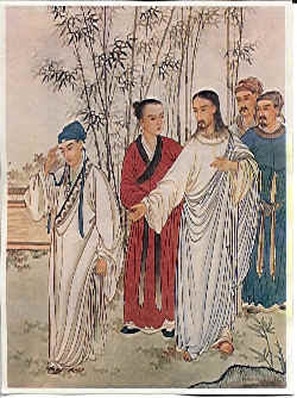
PictureBeijing 1879


​


​Jesus, son of Mary, was a poor man overflowing with riches.
 
The Gospels, in Matthew, Mark and Luke, report Jesus being asked by a rich man what actions lead to eternal life.
 
Follow the commandments Jesus said.
 
The rich man said he did: what else?
 
Sell all your possessions and follow me Jesus said.
 
The rich man was distraught, the disciples confused.
 
Jesus continued: How hard it is for the rich to enter the Kingdom of God / Indeed, it is easier for a camel to go through the eye of a needle than for a rich man to enter the Kingdom of God.
 
The disciples asked: Who can be saved?
 
What is impossible with man is possible with God said Jesus.
 
Possible.
 
Jews, Catholics, Muslims and Protestants agree; Jesus was a teacher of being rich in things other than worldly riches: someone poor in materialism, yet rich in material.
 
Citizens gathered in a US House according to numbers would represent our beliefs ~ the beliefs of We the People, poor and otherwise.
 
*Next Up: Wednesday 12 July and a 2020: The Four Orders of Reality in a Baudrillardian Nativity.
 
Posted by Bryan W. Brickner

0 Comments

2020: Tax Day Disses Our Revolution and Abraham Lincoln

4/15/2017

0 Comments

 
Picture"No Taxation Without Representation"


​
​Someone who disrespects is showing respect for another value.
 
For instance, the phrase “No Taxation Without Representation” animated the American Revolution. Taxation without representation is what monarchs and other toughies do and value; representation with taxation is a republican value.
 
So when We the People are disrespected, that is taxed without constitutional representation according to numbers, a usurper is actually showing respect to a monarchic mentality that we can call anti-republican and anti-USA.

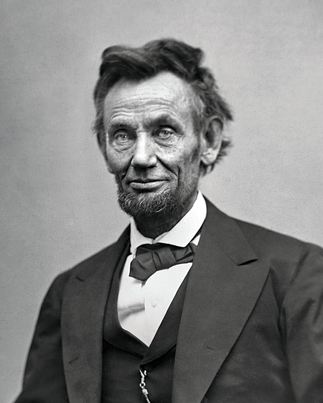
PicturePresident Abraham Lincoln February 1865


​The same dis is observable in having Tax Day and the day Abraham Lincoln died coincide: usurpers did that, not republicans.
 
One can say Lincoln saved our Republic from killing itself; having Tax Day on his death day shows a lack of humility on the part of the usurpers. Simply put, it is arrogance.
 
April 15th is a double Republic dis: taxation without representation and it mocks the accomplishments and sacrifice of Abraham Lincoln. We are, by the logic of this day, the Usurped States of America and not the united ones.
 

*Next Up: This Wednesday April 19th and some serotonin receptor science.
 
Posted by Bryan W. Brickner

0 Comments

Usurpation Day 2017: Augustine, Freedom and Arendt Footnotes #8

4/9/2017

0 Comments

 
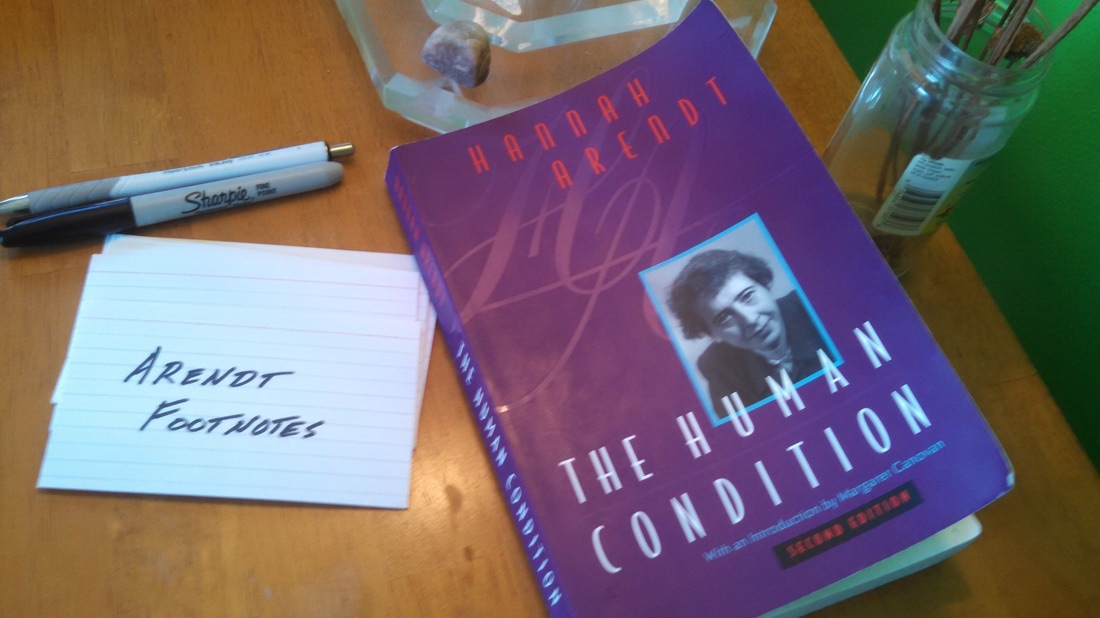
PictureUsurpation Day 2017: Arendt Footnotes #8


Two hundred and twenty-five years ago, on 9 April 1792, Congress initiated the representation usurpation we still live under, the one against We the People and our birthright, constitutional representation according to numbers.
 
Usurpation of representation is illegal, immoderate and unconstitutional.
 
Usurpation of representation is a stolen American birthright.
 
Usurpation of representation is an act of war against We the People.
 
Speak your birthright America: for those who believe in the US Constitution, let 2020 begin today.
 
Hannah Arendt
The Human Condition
Section 24: The Disclosure Of The Agent In Speech And Action
(177, bold added)
 
To act, in its most general sense, means to take an initiative, to begin (as the Greek word archein, “to begin,” “to lead,” and eventually “to rule,” indicates), to set something into motion (which is the original meaning of the Latin agere). Because they are initium, newcomers and beginners by virtue of birth, men take initiative, are prompted into action. [Initium] ergo ut esset, creatus est homo, ante quem nullus fuit (“that there be a beginning, man was created before whom there was nobody”), said Augustine in his political philosophy. (footnote 2) This beginning is not the same as the beginning of the world; (footnote 3) it is not the beginning of something but of somebody, who is a beginner himself. With the creation of man, the principle of beginning came into the world itself, which, of course, is only another way of saying the principle of freedom was created when man was created but not before.
 
2. De civitate Dei xii. 20.
 
3. According to Augustine, the two were so different that he used a different word to indicate the beginning which is man (initium), designating the beginning of the world by principium, which is the standard translation for the first Bible verse. As can be seen from De civitate Dei xi. 32, the word principium carried for Augustine a much less radical meaning; the beginning of the world “does not mean that nothing was made before (for the angels were),” whereas he adds explicitly in the phrase quoted above with reference to man that nobody was before him.
 
Next Up: Saturday April 15th and a 2020: Tax Day Disses Our Revolution and Abraham Lincoln.
 
Posted by Bryan W. Brickner

0 Comments

Republican Values: Gus Kotka and Johnny Reb On Our Way Constitutional Solutions

3/19/2017

0 Comments

 
PictureGus Kotka and Johnny Reb OOW One


​Part 13 of 13
 
“What happens next Reb?”
“Forward.”
“I mean for We the People?”
“Forward.”
“Specifically.”
“There are constitutional solutions Gus.”
“Amendment.”
“For sure.”
“Amend what though?”
“The representation ratio in Article 1, Section 2, Clause 3.”
“It’s 2017.”
“Yes.”
“So 2020 is the next Enumeration.”
“Correct.”
“If Congress is going to make amends, they have to get started.”
“True: Article 1 certainly does not say Congress can set its own number of representatives for We the People.”
“That’s our birthright.”
“And that’s the usurpation.”

PictureGus Kotka and Johnny Reb OOW Two


​“How many constitutional solutions are there Johnny?”
“Three.”
“So amend the representation ratio from thirty Thousand to a new number is one way.”
“Yes.”
“What else?”
“Completing the original Bill of Rights.”
“That sounds appealing.”
“Of course.”
“What does completing the Bill of Rights mean?”
“States voting for Article the first.”
“Okay.”
“Article the first would raise the ratio from thirty Thousand to fifty Thousand.”
“What’s its status?”
“Available.”
“Meaning?”
“Something like 27 states would have to pass it to become law.”
“Sounds easier than a new representation ratio.”
“It would be, and it would complete part of our founding.”
“The Bill of Rights.”
“Yes.”

PictureGus Kotka and Johnny Reb OOW Three


“What’s the third constitutional solution Reb?”
“Honor our founding and the founders’ creation, We the People.”
“By using the thirty Thousand in 2020.”
“That’s it.”
“And it got this way because of George?”
“He put the thirty Thousand in the Constitution.”
“Washington did?”
“It was forty Thousand until the last day of the Convention.”
“Then George ordered the change?”
“No, he requested it.”
“Okay.”
“They made the change on the spot.”
“Left their mark ‘eh?”
“Left a smudge on the Constitution.”
“Metaphor.”
“Appears so.”
“What day did George smudge our Constitution?”
“Seventeen September 1787.”
“Constitution Day.”
“Forward is as easy as one, two three Gus.”
“Johnny, we should shine some light on representation.”
“Indeed.”
 
*Next Up: 4 April and some spring and summer thoughts. Gus Kotka and Johnny Reb will begin again 17 September 2017 in Part II of Republican Values: On Our Way.
 
Posted by Bryan W. Brickner

0 Comments

We Shall Dream Again: Women’s Day 2014 and Constitutional Representation

3/7/2014

0 Comments

 
Picture

We shall dream again.

The “we” is We the People. Women are more than half of We the People yet have only 18% representation in the US House.

The “shall” is constitutional. Counting the people is the purpose of the decennial Census; lawmakers are then to divide by the representation ratio in Article I, Section 2, Clause 3 of the US Constitution: “The Number of Representatives shall not exceed one for every thirty Thousand, but each State shall have at Least one Representative.”

The “dream” is foundational. The representation ratio is the constitutional definition of We the People.

The “again” is time. 2016’s presidential election is not about a woman in the White House: it’s about women in the US House of Representatives. Congress always added seats (representatives) to the US House after each Census: in 1920, they suddenly stopped.

We shall dream again America ~ as it’s a heritage dream ~ one that represents all of US.

Bryan W. Brickner

Women’s Suffrage Documentary

0 Comments

Represent the Women of We the People

1/28/2014

0 Comments

 
Picture
*This post continues a theme from January 2013: the under-representation of women in the US House. It’s an updated excerpt from the introduction of my 2006 book, Article the first of the Bill of Rights: Constitutional representation – the forgotten story of We the People. The main update: in 2006 the US House was 16% women – today it’s 18%.

The founders approach to government was scientific. They had many ideas about how to build a new government, but they also had a lot of doubt. This led to debates on how to proceed, as revolutions are never clear.

The founders attempted to build a system that would protect such rights as the (now) famous, “Life, Liberty, and the Pursuit of Happiness.” They also knew, when talking of citizens and representation, that there was no monopoly on how to define those three rights. Freedom is a deep well; it has also been aptly referred to as an abyss. Our revolutionaries certainly knew the abyss. Thirteen colonies do not revolt against their King and fight an eight-year civil war and not come to know the abyss. Those subjects-turned radical revolutionaries who took up arms against their law and the King of England, they had firsthand knowledge of how deep the well of human freedom ran – they lived it and then left us a blueprint: the US Constitution.

The first time I considered constitutional representation a political issue, rather than a historical one, was in graduate school at Purdue University. Before that, when I taught high school US history classes, I recall discussing the representation ratio but dismissing it; frankly, it seemed old.

Then, as a political science graduate student, I was assistanting a professor who was lecturing on the US Constitution, The Federalist Papers, and James Madison. At one point, the third clause in Article I, Section 2 entered the lecture. After class we discussed the size of a constitutional House, one based on the constitutional ratio of “one for every thirty Thousand.” The House would be huge, we agreed, but mostly we thought it impractical.

That was nearly twenty years ago. Since then I began to think of the representation ratio in constitutional, and not congressional, terms. If we were to build a new Congress based on the constitutional ratio of one for every thirty Thousand, we would have a House of Representatives of 10,000 members. This would bring dozens of groups (factions) into the constitutional process and fundamentally change Congress. For example, women won the right to suffrage with the Nineteenth Amendment (1920), but have never received their right to representation according to their numbers. Women are more than 50 percent of We the People, and yet they are represented in the current House, our 113th, with 79 Representatives, or 18 percent of the representation; that is a 32 percent under-representation of women as a group. Such under-representations of We the People create profound political, and constitutional, consequences.

Bryan W. Brickner

0 Comments

There are no Pilgrims on the US Supreme Court

11/27/2013

0 Comments

 
Picture
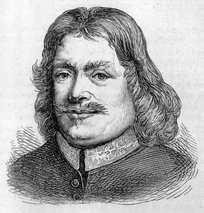
John Bunyan 1628-1688

There’s no Blue Ox in John Bunyan’s The Pilgrim’s Progress (1678), though there does seem to be about everything else.

The book is an English Christian classic for its allegorical portrayal of a pilgrim’s pilgrimage. In Bunyan’s tale, “Christian” is both a metaphor (one who accepts Jesus as Christ) and the name of the Pilgrim who takes a life changing journey from the City of Destruction to Mount Zion and the Celestial City. Christian’s trip reads like Alice in Wonderland dosed with Voltaire’s Candide and highway-tested with Zarathustra-like problem solving. For example, after seeing the cross, dropping his burden and watching it fall into the mouth of a sepulchre (burial pit), Christian meets three Shining Ones (angels) who bless him with gifts; he then breaks into song:

Who’s this? the Pilgrim. How! ‘tis very true,
Old things are passed away, all’s become new.
Strange! He’s another man, upon my word.
They be fine feathers that make a fine bird.

Then Christian gave three leaps for joy, and went on, singing:

Thus far did I come laden with my sin;
Nor could aught ease the grief that I was in
Till I came hither: What a place is this!
Must here be the beginning of my bliss?
Must here the burden fall from off my back?
Must here the strings that bound it to me crack?
Blest cross! blest sepulchre! blest rather be
The Man that there was put to shame for me![i]

John Bunyan (1628-1688) was a “tinker” by trade (he fixed pots and pans and traveled Gypsy-like) and an earthy-type of preacher (imagine a swearing Puritan). He was jailed twelve years for preaching Protestantism (basically, he wanted to preach his way – the way he felt the Good Lord); they would have let him out if only he’d stop the preaching – but he kept saying he’d preach his word of God as soon as he was out the prison gates. Bunyan began The Pilgrim’s Progress while jailed (he wrote lots of books) and the Quakers helped secure his unconditional release through petition to the English Crown.

How famous was John Bunyan? Ben Franklin wrote in his Autobiography (1791) that The Pilgrim’s Progress was the second most popular book in colonial America (Bible first); he also said, as a noted book collector, that Bunyan’s works were his first complete collection.

Obviously, Bunyan and the Protestants didn’t invent the Pilgrim: there have been and will be Jewish pilgrims, Catholic pilgrims and even Nothing-in-Particular pilgrims. In the US though, our founding and what we celebrate on Thanksgiving Day are rooted in a Protestant-Puritan Pilgrim Age.

This problem, that there are no Protestants on the US Supreme Court (the last one was in 2010, Justice John Paul Stevens), is not a religious problem; Article VI of the US Constitution is clear on that question, as it states: “but no religious Test shall ever be required as a Qualification to any Office or public Trust under the United States.” No, this is about representation and twelve words in Article I of the US Constitution: “The Number of Representatives shall not exceed one for every thirty Thousand.” Unambiguously, this is not religious: it’s representational and about representing We the People in Congress according to our birthright – George Washington’s number, 30,000.

The US Congress sets the number of justices on the Court and a constitutional House of 10,000 Representatives would certainly add judges; to wit, as things are, five judges decide the fate of a law for a nation of over 300 million citizens: that’s one justice for every 60 million people.

Here’s a just bid: add a nine before the nine to make it 99.

Yeah, 99 Supremes instead of nine. That alone would add Protestants (51% of Americans according to Pew Research), Nothing-in-Particulars (12%), Mormons (1.7%), Atheists (1.6%), Buddhists (0.7%), and Muslims (0.6%) to the six Catholics (24%) and three Jewish (1.7%) justices on the Court. While we are on the topic, let’s think of adding citizens like a truck driver judge (approximately 0.5%), you know, people familiar with life on the road, journeying like a pilgrim across this land of ours – yeah that sounds supreme as well.

In The Pilgrim’s Progress, after encountering the Shining Ones, Christian’s dreamscape takes him to three men in iron fetters – Simple, Sloth and Presumption – reminding all of us in the 21st century (and perhaps even this weekend) that maybe things haven’t changed that much.

Happy Thanksgiving Everyone ~ Peace Up!
Bryan W. Brickner

[i] John Bunyan, The Pilgrim’s Progress (New York: Washington Square Press [1678] 1961), 37.


0 Comments

The Peace Terms of We the People

10/27/2013

0 Comments

 
An introductory essay for ~
The Book of the Is: A book on bridges
(2013)


The Book of the Is is a theory of the Is (everything and nothing).

As a theory of the Is it bridges to solutions (mostly political ones).

The Is and Is Not, as political theories, were noted in the work of Parmenides, a pre-Socratic thinker. Parmenides thought the Is Not to be an inscrutable path; he also understood humans would still choose that path: the same is true today.

Regardless of your political identification, libertarian, progressive, conservative, liberal, communist and/or tea partier, the ratified US Constitution is “an Is” and it contains the peace terms for US citizenry. Those terms, the peace terms of We the People, are as follows:

·      USC Article I, Section 2, Clause 3: “The Number of Representatives shall not exceed one for every thirty Thousand, but each State shall have at Least one Representative.”

·      USC Article V: the Amendment process is available for US citizenry to alter these ratified peace terms (the “thirty Thousand” in Article I, Section 2, Clause 3 for example).

·      USC 7th Amendment: regarding common law, preserves the right to trial by jury in the districts of thirty Thousand mandated in Article I, “where the value in controversy exceeds twenty dollars [$20].”

·      Article the first of the congressional Bill of Rights (1789): this proposed and active amendment (the first and last of the original twelve), would change the ratio ratified in Article I from thirty Thousand to “fifty Thousand.”

We the People have already won the war between “us” and the peace terms have been ratified. Evidently, it is up to us to build the peace, as that is and will be our heritage: representing We the People in Congress according to our numbers.

Constitutions quell challenges, making them an integral part of our Is. This is not a question of morality in the sense of right and wrong: the US Constitution is not a moral concern – it’s a legal one. What’s to be done with this Is – these terms of peace – that’s up to US.

The Book of the Is (2013)

0 Comments
<<Previous
Forward>>

    Author

    Brickner has a 1997 political science doctorate from Purdue University, cofounded Illinois NORML in 2001, and was a 2007 National NORML Cannabis Advocate Awardee. He is also publisher and coauthor of the 2011 book banned by the Illinois Department of Corrections – The Cannabis Papers: A Citizen’s Guide to Cannabinoids.

    Archives

    November 2019
    October 2019
    September 2019
    July 2019
    June 2019
    May 2019
    April 2019
    March 2019
    February 2019
    January 2019
    December 2018
    November 2018
    October 2018
    September 2018
    August 2018
    July 2018
    June 2018
    April 2018
    March 2018
    February 2018
    December 2017
    November 2017
    October 2017
    September 2017
    August 2017
    July 2017
    June 2017
    May 2017
    April 2017
    March 2017
    February 2017
    January 2017
    December 2016
    November 2016
    October 2016
    September 2016
    August 2016
    July 2016
    June 2016
    May 2016
    April 2016
    March 2016
    February 2016
    January 2016
    December 2015
    November 2015
    October 2015
    September 2015
    August 2015
    June 2015
    May 2015
    April 2015
    March 2015
    February 2015
    January 2015
    December 2014
    November 2014
    October 2014
    September 2014
    August 2014
    July 2014
    June 2014
    May 2014
    April 2014
    March 2014
    February 2014
    January 2014
    December 2013
    November 2013
    October 2013
    September 2013
    July 2013
    June 2013
    April 2013
    January 2013
    October 2012

    Categories

    All
    17 September
    22nd Amendment
    2 AG
    2-AG
    435
    502nd Infantry
    5 HT
    5-HT
    5-HT
    5 HTP
    5-HTP
    7th Amendment
    9 April 1792
    Aborigine
    A Cabal
    Acetylcholine
    Adam Smith
    Aesop
    Aging
    Akhil Reed Amar
    Albert Hoffman
    Alcohol
    Alexander Hamilton
    Alexander R. Boteler
    Alice In Wonderland
    Alzheimer's/Dementia
    Ambrose Burnside
    American Revolution
    Anandamide
    Andrew Leitch
    Antietam/Sharpsburg
    Anti Republic
    Anti-Republic
    Anti-Semitism
    Archie Lieberman
    Art
    Artemis
    Article The First
    Aspasia Of Miletus
    Athena
    Augustus Kotka
    Bastogne
    Benjamin F. Cheatham
    Benjamin Franklin
    Bivalency
    Black Hawk War 1832
    Brain Gut Axis
    Brain-gut Axis
    Bringing It Home
    Burning Man
    California
    Cancer
    Candide
    Cannabinoids
    Cannabinoid System
    Cannabis
    Carcinogenesis
    Caryophyllene
    Caudate Putamen
    Cb1
    Cb2
    CB2 GPR55 Heteromers
    CB2-GPR55 Heteromers
    CBD
    Cheatham Hill
    Chicago
    Circulatory System
    Cluster Headache
    CNS
    Colitis
    Comrades
    Confederate
    Conservative-Liberal (CL)
    Constitutio Libertatis
    Constitution
    Daimon
    Daniel Morgan
    David Bradford
    David Redick
    Depression
    Despotism
    DHA
    Didaskalos
    Digestive System
    Domestic Tranquility
    Donald Trump
    Dopamine System
    Douglas Southall Freeman
    Dubuque
    Earth Day
    Eisenhower
    Elbridge Gerry
    Electoral College
    Emperor Napoleon
    Endocrine System
    Enumeration
    EPA
    Epilepsy
    Er
    Estrogen
    Exercise
    Ex Falso Quodlibet
    FAKE News
    Federalist 57
    Florida
    Fort Sumter
    Founders
    Francis P. Blair
    Freedom
    Free Markets Cannabis Act (FMCA)
    French Revolution
    GABA
    Gallant Fourteenth
    Georges Danton
    George Thomas
    George Washington
    Georg Groddeck
    Gettysburg
    Gideon
    Gliomas
    Glutamate
    Goddesses
    Government Grown
    Gpr55
    Graham Greene
    Hannah Arendt
    Harlem Heights
    Headache
    Hedonism
    Hemp
    Henry Knox
    Henry Kyd Douglas
    Henry Lee III
    Herbaceutical
    Herbiceutical
    Heteromers
    Hillary Clinton
    Homeostasis
    Horatio Gates
    Hot-flash-reduction
    Hypothalamic-neurohypophyseal
    Ice
    Illinois
    Immigrants
    Immune System
    Indiana
    Indiana 99th Regiment
    Indole-quinuclidine-analogs
    Inflammation
    Irritable Bowel Syndrome Ibs
    It
    Jack-herer
    James Monroe
    James Rumsey
    James W. Foley
    James Wilkinson
    Jean Baudrillard
    Jefferson Davis
    Jesus
    Jim-champion
    Joe
    Johann Palm
    John Adams
    John Bunyan
    John Finley Pettigrew
    John F Kennedy
    John-jay
    John Locke
    John Mosby
    Johnny Reb
    John Roberts
    Jonathan Magbie
    Kaiser Wilhelm
    Keith Marker
    Knowbody
    Kynurenine
    Lil Man
    Liminal
    Lincoln
    Lipids
    Louis Armstrong
    LSS
    Lt
    Lysergic Acid Diethylamide Lsd
    Madison
    March-madness
    Marijuana
    Martin Luther
    Maximilien Robespierre
    Melanocortin Circuit
    'Mericans
    Michigan
    Microbiota
    Migraine
    Mitochondria
    Molly Role
    Monroe Doctrine
    Montesquieu
    Morphine
    Mt-vernon
    Muggles
    Multiple-sclerosis
    Nabiximols-sativex
    Nazis
    Nemesis
    New York
    Nietzsche
    North Carolina
    Nowhere
    Nuclear Receptors
    Obama
    Obesity
    Ohio
    Once Upon A Time
    Opioid
    Otto Snow
    Pain Relief
    Paraquat
    Parmenides
    Parthenongenesis
    Patrick-henry
    Paula Lind Ayers
    Peace Terms
    Pediatric
    Pericles
    Philadelphia
    Phototherapy
    Physiodelia
    Physiology System
    Pituitary-stalk
    Plato
    Pot
    Pregnancy
    President Taylor
    Psilocybin
    PTSD
    Publius
    Puritans
    Putin
    Quakers
    Race
    Ra Chaka
    Ralph Waldo Emerson
    R. Bruce Dold
    Representation
    Reproductive System
    Republic
    Respiratory-system
    Richard Lee I
    Rick Simpson
    Robert Dahl
    Robert E. Lee
    Roman Republic
    Sarah Tonin
    Sarajevo
    Secession
    Serotonin System
    Shall
    Shivitti
    Silent Night
    Skeletal System
    Slavery
    Sleep
    Snake And Turkey
    Socrates
    Sophie Scholl
    Sophocles
    South Carolina
    Sperm
    Spermatogenesis
    Spermatozoa
    Sport
    Star Of David
    Stephen Young
    Suicidal
    Sun Tzu
    Sweat
    Tell Lie Vision
    Tell-Lie-Vision
    Texas
    THC
    The Boys
    The Cannabis Papers
    The Federalist Papers
    The-federalist-papers
    The Few
    The Lost Special Orders #191
    The Many
    The Quiet American (1955)
    The Unrepresented
    Thirty Thousand
    Thirty-thousand
    Thomas-jefferson
    Thomas Knowlton
    Thomas Sumpter (Sumter)
    Three Fifths Representation
    Three-fifths Representation
    Tom Paine
    Tory Crown
    Traumatic Brain Injury
    Trenton
    Truck Drivers
    Tryptophan
    Tsar Nicholas
    Tuscarora / Hemp Gatherers
    US Grant
    Us Supreme Court
    Usurpation
    Usurpecans
    Valkyrie
    Vanilloid-system
    Veritas
    Veterans
    Vietnam
    Virginia
    Visual-system
    Walter-benjamin
    Weed
    West Virginia
    We The People
    We-the-people
    Whiskey Rebellion
    White Rose
    William-abens
    William Findley
    William Washington
    Wine
    Winfield Scott
    Women
    Yale
    Yankee Doodle Dandy
    Zarathustra

    RSS Feed

Powered by Create your own unique website with customizable templates.