Bryan William Brickner
  • Blog
  • Interviews
  • Articles
  • Books
  • Photos and Video
  • Links

Thereat: Gus Kotka and Johnny Reb, On Our Way ‘Mericans

9/24/2017

1 Comment

 
PictureJohnny Reb and Gus Kotka Thereat Directly


​II of XIII


​
“Reb, you said Virginia was directly before us.”
“Yes.”
“So by ‘directly’ did you mean like just over that tree-line directly?”
“By the light I meant.”
“That light?”
“Sure, that light.”
“That’s close.”
“If we catch the right light, we can be there in moments Gus.”
“You mean light traveling and not ‘by’ that light.”
“Right.”
“I thought you meant we were directly close to Virginia, like that time in Maryland.”
“By light I meant.”
“I get the feeling Virginia is camp talk.”
“It’s called ‘in the news’ now.”
“Sounds fancy.”
“Directly.”

PictureJohnny Reb and Gus Kotka Thereat Bending


​“What’s happening in Virginia Reb?”
“Hard to say.”
“Stuff though.”
“I only like going back there so much Gus.”
“I hear ya.”
“The Confederacy still upsets people.”
“You?”
“Johnny Rebs that died in combat didn’t get to come back, come back to being ‘Merican.”
“Right.”
“We died as rebels.”
“Okay.”
“Johnny Rebs that surrendered, we came back to the Union, so we came back as ‘Mericans.”
“True.”
“Surrender can strengthen.”
“Bending can strengthen.”
“Like that.”

PictureJohnny Reb and Gus Kotka Thereat Light


​“Robert E. knew the strength of bending.”
“He did Yank.”
“His surrender was an ‘out of the darkness and into the light’ moment.”
“It was.”
“What did Lee do after the war?”
“Led a college.”
“Like his West Point days.”
“Like those.”
“That’s a way back Johnny.”
“True.”
“So Virginia today?”
“Yes?”
“The camp talk is?”
“The news?”
“That.”
“Well …”
 
*Next Up: Sunday 1 October and Thereat part III, Gus Kotka and Johnny Reb On Our Way Representational Solutions.
 
Posted by Bryan W. Brickner
1 Comment

Some US History and the Neurotransmitter Acetylcholine: Tobacco (Nicotine) Soldiers Soldiering

8/11/2017

0 Comments

 
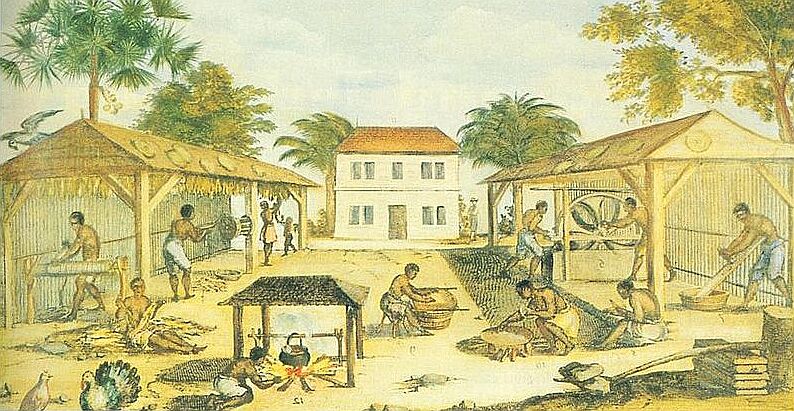
PictureVirginia Tobacco Plantation 1670


Supplying Europe with tobacco, something indigenous to the Americas, was how Virginia and the southern colonies got started: they had something to trade. That all began more than 400 years ago; yet the notion tobacco was activating a receptor wired into our biology by the creative process called life, that was not known until the 20th century.
 
If we retell the history of tobacco from an acetylcholine (biological) receptor point of view, one accounting for the receptor’s addictive as well as performance enhancing qualities, we can see a way of understanding why soldiers, for example, used tobacco and why it was considered good for soldiering.
 
Twentieth century US armed forces were supplied tobacco in their rations (WWI, WWII, Korea, and Vietnam); this changed in the late 70s and early 80s. The change was because of the negative health effects on soldiers found to be caused by tobacco smoking and chawing, though there wasn’t any change in the importance of acetylcholine.
 
What do our acetylcholine receptors do? Put simply, they touch (activate) every muscle and nerve in our bodies, have both cellular and skeletal effects, and modulate our autonomic and central nervous systems. So something that activates every muscle and nerve as well as our autonomic and central nervous systems, might be of importance to staying alert, awake, and ready for action (soldiering).
 
Imagine the US Civil War without tobacco. The Confederate soldier as well as the general population of the South (free and slave) used lots of tobacco; chewing and spitting were common even among women and children. Tobacco use, and therefore acetylcholine modulation, helps to explain the hardships endured (lack of food and shelter and so on) during that time of war and the period after.
 
There is a misunderstanding concerning the role of acetylcholine activation in health: we moralize tobacco use without praising (or knowing of) acetylcholine modulation. In doing so, we also misunderstand how a biological receptor changed the course of world history and helped build the United States of America – from the inside out.
 
*Next Up: Sunday 17 September, US Constitution Day 2017, and the beginning of an autumn Gus Kotka and Johnny Reb series, On Our Way Thereat.
 
Posted by Bryan W. Brickner
0 Comments

Union 2016: Gus Kotka and Johnny Reb Nowhere Virginia Roam

3/4/2016

0 Comments

 
PictureGus Kotka and Johnny Reb Nowhere Roam


​Winter series part 9 of 13
 
The apples turn to brown and black, the tyrant’s face is red.
 
“- Johnny?”
“Yeah Gus.”
“The Story of Virginia,” Gus thought, “must be an old story.”
“It is.”
“Virginia is a woman’s name.”
“Correct,” noted Reb, “and Virginius is the masculine.”
“Like Augusta and Augustus.”
“True.”
“So it’s Roman?”
“Foundational.”
“Where’d you learn this story?”
“Lots of places.”
“Name one.”
“West Point.”

PictureGus Kotka and Johnny Reb Nowhere Roaming


​“That’s right,” paused Gus, “Johnny Reb the West Pointer would have had quite an education.”
“Grant was a West Pointer.”
“So were Lee, Longstreet and Jackson.”
“Add Jeb Stuart, Braxton Bragg and Jefferson Davis.”
“The Confederate President?”
“Yes.”
“Oh geez.”
“I know.”
“So what’s the story?”
“With Virginia?”
“Yeah.”
“It’s one of sacrifice.”

PictureGus Kotka and Johnny Reb Nowhere Roamed


​“Oh-oh.”
“Right.”
“What gets sacrificed?"
“Virginia.”
“Reb!?”
“That’s the story Yank.”
“I did ask didn’t I.”
“You did.”
“So there must be a bad man?”
“Appius Claudius.”
“Never heard of him.”
“Appius was a tyrant during the early days of the Roman Republic.”
“Appius sacrificed Virginia?”
“No, Virginius did that.”
“Who’s he?”
“Her father ...”
 

*Next Up: The Union 2016 winter series continues tomorrow, Saturday 5 March, with part 10, the Virginia of Rome.
 
Posted by Bryan W. Brickner



0 Comments

Constitution Day: Gus Kotka, Johnny Reb and Antietam 1862

9/16/2014

0 Comments

 
PictureAntietam Somewhere


War Cry Heal Union
The summer series finale (10 of 10)

Honoring Constitution Day 2014 and 1862


“Hey Gus.”
“Hey Reb.”
“Our Once Upon A Time chat got interrupted yesterday …”
“Darn Squeak.”
“… Right,” continued Reb, “and welcome to Somewhere.”
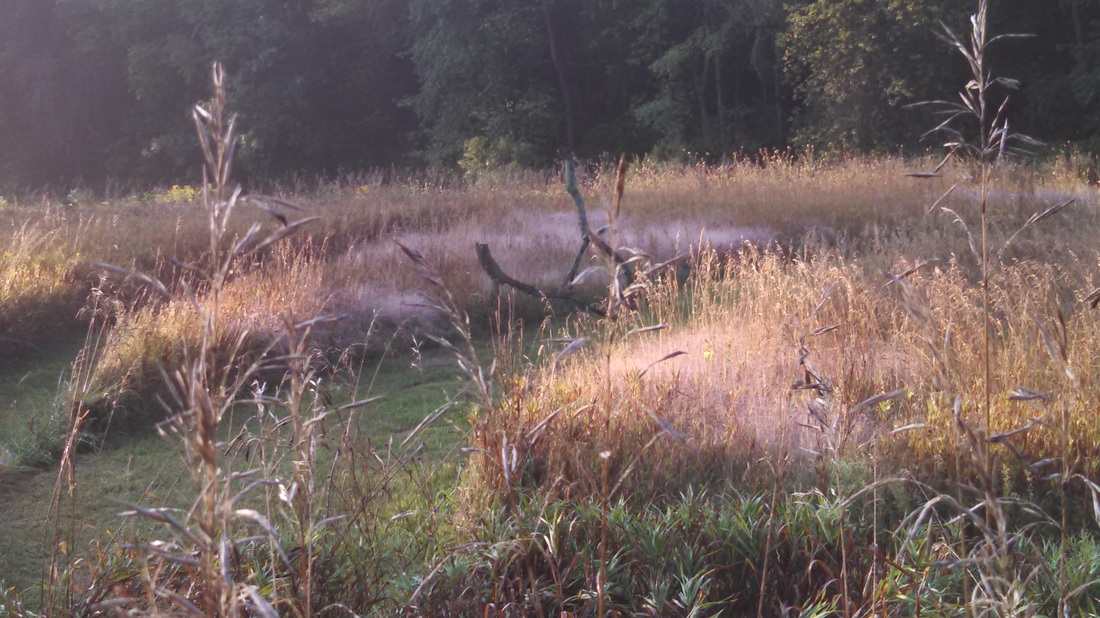
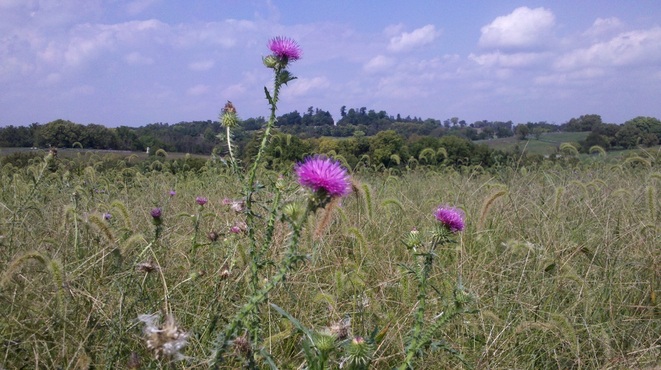
“I’d say it’s nice like Nowhere,” Gus observed, “– and thistles too.”
“It wasn’t always this nice.”
“So where is Somewhere Reb?”
“Antietam.”
“No shi-kiddding?”
“No kidding.”
“So, the Dandies of Harlem Heights.”
“Yeah.”
“I figure,” Gus began, “you wanted me to see the problem.”
“What problem is that?”
“The problem of who got me shot,” Gus stated, “so you brought me the story of the battle through the eyes of the Yankee Doodle Dandies.”
“American Rebels.”
“And to show me the similarities between Leitch and the other soldier, the one killed on the field.”
“Thomas Knowlton.
“Yeah him: I remember Leitch died thirteen days later ~ sort of one day for each Stripe.”
“Nice reckoning.”
“So where we at on Antietam?”
“An orientation perhaps?”
“Great ... and is it Constitution Day in Somewhere, I mean Antietam, too?”
“Eternally Gus …”

PictureSharpsburg Somewhere


“You were here Johnny.”
“Yeah,” Reb panned, “the question is where were you in September 1862?”
“South Bend Indiana.”
“Indiana ‘eh.”
“Right, the 99th Volunteers were mustered into the US Army …” Gus paused: “I volunteered after …”
“After what?” Reb asked.
“… Antietam is the culmination of Robert E. Lee’s Maryland Campaign.”
“You volunteered in August 1862, right?”
“Did: the 99th was mustered into service 21 August 1862,” affirmed Gus and added, “- I see your suggestion Johnny.”
“Still need that orientation Yank?”
“Not really.”
“Whatcha’ thinking?”
“All these citizens Reb … their lives for what?”
“The bloodiest day in our heritage.”
“There’s something else, isn’t there?”
“Generally …”
“The Potomac’s near.”
“Yes.”
“Can we go there?” asked Gus.
“For a moment …”

Picture
Potomac Somewhere


“… Here it is.”
“Big.”
“Not so big …”
“No, the thing across it?”
“Bridge Yank.”
“Monster of a Bridge.”
“Yeah.”
“Is that Virginia?” wondered Gus.
"It is."
“So much talk about it ~ seems like a place to go.”
“Say more ..."
“Crossing a river is symbolic.”
“It’s been said so.”
“Can we …”
“Visit Virginia,” Reb pondered, “like maybe next year?”
“I’m available ~ you?”
“Think so.”
“Summer again Reb?”
“Feels like Spring.”
“Great.”
“It's Time to go Gus.”
“You hear something?”
“No ... just Time.”
“Thanks Reb.”
“Thanks Gus.”
PictureGus and Reb Somewhere Sunset


*In October, look for Ew Publishing’s mini-series, Whiskey 220: The Rebellion. Hosted on the BWB Blog, Whiskey 220 honors the successful conclusion to a domestic insurrection 220 years ago; it does so by highlighting President George Washington’s personal notes while traveling to inspect the State militias: the series includes a meeting with Virginia’s Governor Henry Lee III. Whiskey 220 begins Saturday, 11 October.

Thanks All!
~
Posted by Bryan W. Brickner

Video:
Johnny Cash sings Civil War songs

0 Comments

1776: Gus Kotka, Johnny Reb and the Dandies of Harlem Heights

9/15/2014

0 Comments

 
War Cry Heal Union: The series (9 of 10)

Once upon a time …

“Hey Gus.”
“Hey Reb ~ Where we at?”
“Once Upon A Time.”
“Once Upon A Time?” Gus quizzed, “you said we’d meet Somewhere next time.”
“I did,” Reb confirmed, “and tomorrow's Somewhere …”
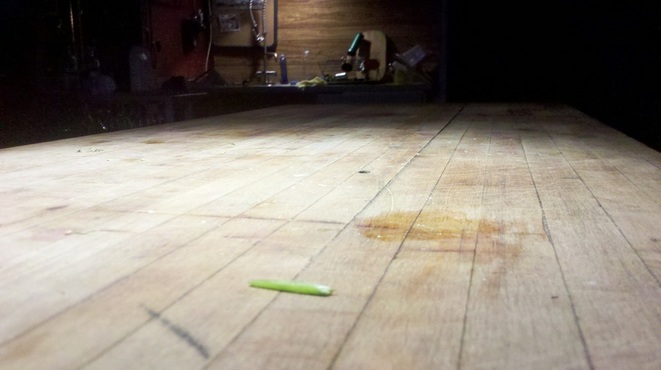
PictureOnce Upon A Time Green Bean


“Great … then what’s with the green bean?”
“It’s a kitchen Gus.”
“Okay …”
“There’s a Dandy story here,” assured Reb, “and it’ll make our Somewhere time better.”
“A dandy one ‘eh?”
“The Dandies of Harlem Heights.”
“No kidding?” crafted Gus, “… then what goes with Once Upon A Time?”
“Burners …” offered Reb.”
“Burners?”
“… They like art.”
“Who’s Art?”
“… C’mon Gus ~ this way.”
“Sure thing Reb ~ though who’s Art? …”

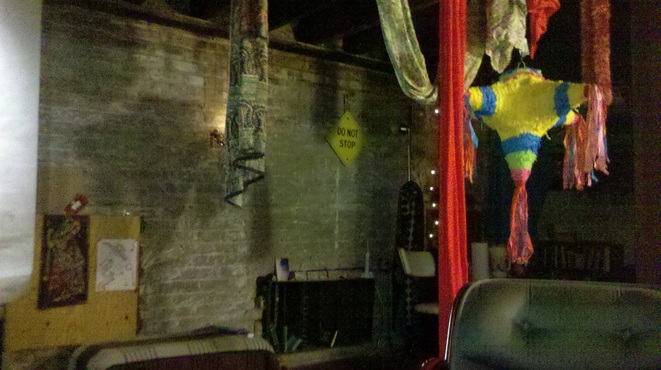
PictureOnce Upon A Time Do Not Stop


“… Hey Reb ~ wait-a-Sec.”
“What now Yank?”
“Are we in Art's dream?”
“You can say that.”
“Then how come you and I are different?”
“Whatcha’ mean Yank?”
“Once Upon A Time? …” thought Gus, “How’d you do this?”
“I’m a composite Spirit,” answered Johnny Reb, “and you’re an individual Spirit Gus.”
“Okay …”
“You get to do your Spirit thing, be that US Army Private, 99th Indiana Infantry Regiment - ”
“Volunteer.”
“Yes, Volunteer Augustus Kotka, killed skirmishing the siege of Atlanta, 11 August 1864.”
“And you Reb? … How’d you die?”
“All the Johnnies Gus.”
“All? … You mean all the deaths?”
“Yes ~ and all the lives too.”
“Which is why you can do more …”
“Right.”
“It’s like …” Gus reasoned, “you’re a Macro and I’m a Micro Spirit.”
“Right again.”
“One more thing … Is that a piñata?”
“… Gus ~ C’mon …”

PictureOnce Upon A Time 48 Stars


“… Gus ~ Here we are.”
“What kind of flag is that?”
“’Merican.”
“The stars Reb …”
“Forty-eight.”
“Lots ~ so where are the Dandies?”
“Here, in the map.” [Richard Hanser, The Glorious Hour of Lt. Monroe, 1976:87.]
“Map’s too small Reb.”
“I know … I just wanted to say something.”
“Good ~ I like listening.”
“Sure you do …”
“I do ~ speak your peace Johnny.”
“The Stripes,” started Reb, “they represent the 13 Colonies in Rebellion.”
“Yes ~ and the Spirit of ’76.”
“And that Spirit had bodies … you know, humans.”
“Of course.”
“In the map are four American Rebels: a General, Colonel, Major and Lieutenant.”
“Officers.”
“Yes: Washington, Knowlton, Leitch and Monroe.”
“George and James for Washington and Monroe: who’s Knowlton?”
“Thomas Knowlton, Connecticut.”
“Say more …”
“Bunker Hill, 1775.”
“With ya’ now.”
“In the map it’s more than a year later,” Reb continued, “16 September 1776 and the New York Battle of Harlem Heights.”
“Who’s Leitch?”
“Andrew Leitch, Virginia … he’d been in New York four days.”
“Had been … what happened?”
“Washington has Knowlton’s Rangers skirmishing –”
“I know Skirmish.”
“– Against some Brits. Knowlton then leads the Rangers and the Third Virginia Regiment on a flanking movement. Knowlton is shot scouting the Brits; Major Leitch, as second in command, steps into the spot Knowlton was just in to assess the situation …”
“That’s the right move.”
“… Right Yank ~ ‘cept the Brits had the range and put three shots into Leitch.”
“Did they die? ~ Then I mean?”
“Knowlton on the field and Leitch thirteen days later.”
“Yankee Doodle Dandy Rebels ~ Knowlton and Leitch.”
“Yes, a Stripe for Connecticut …”
“… And a Stripe for Virginia.”
“Soldiers like Washington and Monroe,” Reb continued, “who give witness to such moments, often feel they were fighting …”
“For something.”
“… And not Against something Gus: Yankee Doodle Dandies fought For Free Speech and Enumerated Representation, you know, like our Nowhere chat,” Reb flickered, “~ Oh’oh …”
“What?”
“Time to go.”
“Already?”
“Heard a Noise.”
“Whatcha’ hear?”
“Squeak.”
“Who’s Squeak?”
“… Gus ~ Tomorrow's Somewhere.”
“I’m with ya’ Reb …”

Video: Yankee Doodle: Music of the American Revolution
~
*Tomorrow ~ US Constitution Day, 17 September 2014, the War Cry Heal Union summer series finale: Gus Kotka, Johnny Reb and Antietam 17 September 1862.    

Posted by Bryan W. Brickner

0 Comments

Civil Wars: Gus Kotka, Johnny Reb and Robert E. Lee

8/10/2014

0 Comments

 
War Cry Heal Union: The series (7th of 10)
This is the 150th anniversary of US Army, 99th Indiana Infantry Regiment, Private Augustus Kotka’s last day on Earth … as a human, that is. He was killed skirmishing in the siege of Atlanta, 11 August 1864; it wasn’t a battle day ~ just one of those days. Kotka’s spirit is present today and meets with Johnny Reb for the 150th time as they discuss civil wars, Robert E. Lee and Nature.
PictureNowhere Sunrise (2014)


“Hey Yank,” Johnny Reb said.
“Hey Reb,” answered Augustus Kotka [1833 to 11 August 1864: KIA US Army, Siege of Atlanta].
“Gus, this ain’t Georgia: where we at?”
“This is Nowhere,” Gus replied; “I didn’t feel like meeting there this time.”
“Nowhere’s nice,” Reb noted. “What’s up though? ~ Whatcha’ wanna know?”
“Who got me killed?”
“That’s the same question for 150 years Yank ~ with the same answer ~ you did.”
“No, really, who got me killed?”
“I did then.”
“You always say that ~ this year things are different though.”

PictureNowhere Thistle (2014)
“How so?”
“The Constitution … it should have worked by now.”
“You’re saying it ain’t working Yank?”
“I got killed fighting ‘For’ something, not ‘Against’ you.”
“Fair enough.”
“Right ~ ‘cept fair means both sides think it’s fair: I don’t think a civil war was fair in 1861.”
“You talking Representation?” asked Reb.
“I think so; what do you know?”
“Lots being a Spirit and all.”
“So how’s that make you feel?" asked Gus; "You know, not having Constitutional Representation and having a civil war over slavery and the three fifths clause and not George Washington’s thirty Thousand?”
“George was a Reb," answered Johnny, "and so was Henry “Light-Horse” Lee and his son Robert E. Lee; Virginia produced lots of rebels.”
“Yup ~ and lots of presidents too.”
“Four of the first five,” Reb added, “hey ~ maybe this Nowhere landscape can help us.”
“Okay.”
“Take this thistle here.”
“Ouch.”
“Right Gus ~ the thorns protect flowers so seeds can be made.”
“Okay.”
“And then look at these flowers …”

PictureNowhere Flowering Weeds (2014)
“… Look like weeds to me.”
“Flowering weeds then ~ yet they do it differently; they share space by numbers …”
“… And not thorns.”
“Right.”
“That’s our civil war,” followed Gus, “seems the founders intended something other than thorns; then what happened with Robert E. Lee?”
“Lee missed a great strategic opportunity,” said Reb.
“1862 Antietam? 1863 Gettysburg? Petersburg 1864?”
“No,” Reb assured, “Blair 1861.”
“Right. US General Winfield Scott, his mentor and fellow Virginian, had asked him to help the Union; and then President Abraham Lincoln, through his intermediary, Mr. Blair, offered US Colonel Robert E. Lee a promotion to Major General and command of an army to quell the rebellion.”
“That is so,” added Reb, “April 1861 was Lee’s moment for Civil Greatness.”
“How so?”    
“Try this on and see if it fits; if US Colonel Lee accepts President Lincoln’s offer, he buys the Union, Confederacy and Virginia a much valued commodity: Time. Lee had lots to work with: the prestige of his family, three decades of Union service, and was friends with Confederate President Jefferson Davis.”
“That makes sense.”
“If Lee takes command,” continued Reb, “he could have dawdled, played the newspaper game, or made a move ~ that would have been Civil and Strategic.”
“I see it Reb; it’s like he could have slowed things down, waited … and then what?”
“That is it ain’t it: then what?” pondered Johnny. “The way things were, with the slave states uniting and the non-slave states in turmoil, it’s not clear what would have happened.”
“Okay …”
“Though with his great abilities,” Reb imagined, “perhaps some big meeting with him and Jeff Davis in Fredericksburg Virginia.”
“Nice imagination Reb.”
“Thanks ~ it’s a fun thought that might have saved your life Gus.”
“And lots of Johnnies.”
“For sure ~ Lee would have had the loyalty of the Union and kinship with the rebellion at his hands; Lincoln would have looked like he needed Lee to make peace, and he probably did.”
“Interesting theory Reb …”
“Then see, Lee is a national hero,” Reb mused, “and he becomes President in 1864 ~ elected by the Union he saved.”
“You’re out there now Reb …”
“Not too far though,” continued Reb, “as no one expected a Nobody like Grant to become president.”
“Lee wasn’t into politics,” noted Gus.
“War is politics,” Reb clarified; “I’m just saying with his family name, being a Virginian that saved the Union … well, who knows how Great that might have been."
“Thanks for the line of thinking Reb ~ nice Ponderances.”
“Ponderances ~ I like that ...”

PictureNowhere Sons Up (2014)

Johnny Reb then gave Gus Yank a Spirit speech: “You know Gus, the year 2020, with the decennial Enumeration (census), is a Time for We the People to build the United States of America the founders’ intended ~ and it’ll be even better than theirs because it fulfills their Spirit in a way they couldn’t …”
“… Representing the Unrepresented.”
“Right Gus; if we Represent in 2020, we’d be honoring our Republic by fulfilling the founders’ Constitutional Rebel vision: a House for We the People and a Senate for We the States.”
“Agreed.”
“Sun’s up Gus.”
“Sounds like ‘Sons Up’ Reb.”
“Sure does ~ Whatcha’ say we meet again?”
“Great.”
“Hey,” smarted Reb, “let’s meet ‘Somewhere’ next time.”
“Got a place in mind?” Gus chuckled.
“I do.”
“That’ll be fun ~ peace Reb.”
“Peace Yank ~ and see you again soon … ”
~
Video Adaptation:
Robert E Lee refuses command of the Union Army

*Extra/New WCHU series announcement from Ew Publishing: we’re adding one to the ten in the War Cry Heal Union series (see our 26 May 2014 release). The addition looks at Representing the Unrepresented “Stock of Abraham” via George Washington and the Hebrew Congregation of Rhode Island; it’ll be number 7.5 of 10 in one week, Monday 18 August 2014.
~
Posted by Bryan W. Brickner



0 Comments

Civil War: Battle Flags, Medals of Honor and Soldiers Unknown

7/19/2014

2 Comments

 
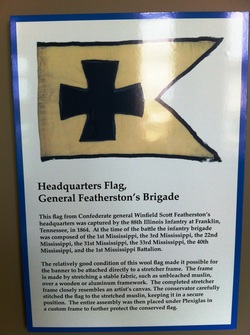
PictureFeatherston's Brigade Flag ~ Franklin 1864


War Cry Heal Union: The series (5th of 10)


Honor and Death were present when Van de Graaff met Buckley.

Imagine a hot Georgia mid-afternoon 150 years ago today; about 1,000 soldiers, mostly Mississippians, hear the fate of Atlanta (and thus the Confederacy) is in their hands.

Now imagine another moment, one less than an hour from the other one, of a Mississippian (Van de Graaff / a name implying Germany) and a New Yorker (Buckley / who was born in Canada) meet and try to kill each other.

Here, I’ll explain …

The commander of the Mississippi brigade, Brigadier General Winfield Scott Featherston, a veteran who fought in the eastern theater (Virginia and Maryland) under the command of Robert E. Lee (at Antietam in 1862, for example), and then was transferred west (also by Lee) later that year. On this day, 20 July 1864, Featherston is leading an aspect of Confederate General John B. Hood’s plan of attack on the Federal approach to Atlanta. Hood was put in command by Jefferson Davis (President of the Confederacy) and brought an “I’ll attack” strategy to the defense of Atlanta; the battle at Peachtree Creek was his first effort.

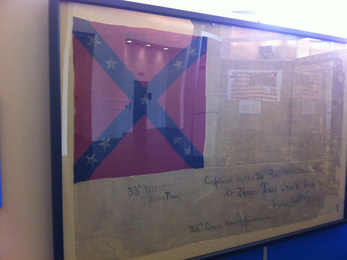
Picture33rd Mississippi Battle Flag ~ Peachtree Creek 1864
Hood told General Stewart, who told General Loring, who told Featherston who then told the 1,000 Mississippians (including Van de Graaff) of their moment. So off they go in attack, six Confederate/MS battalions forward into six Federal battalions ~ two from Ohio and one each from Connecticut, Massachusetts, Wisconsin and New York. The Federal line falls back; at first the charge succeeds with the Mississippi brigade taking the ridge; then the Federals’ fire cannon into the breached line (into the Mississippians) and counter-assault.

The 26th Wisconsin captured the battle flag pictured here from one of Featherston’s battalions, the 33rd Mississippi, and its loss (capture) would have taken place during this phase of the battle; in total, Featherston’s brigade would lose seven battle flags at Peachtree Creek.

Which brings us to the meeting of Van de Graaff and Buckley.  

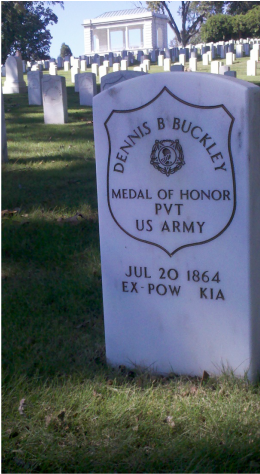
PicturePrivate Dennis B Buckley ~ Peachtree Creek 1864
Private Dennis B. Buckley of the 136th New York battalion struggles with the battalion Adjutant of the 31st Mississippi, W.J. Van de Graaff. Various reports note a hand-to-hand struggle for the flag of the 31st; it would have looked like the one pictured above, the 33rd’s. Van de Graaff, who was carrying the flag only because the other bearers had been shot, lost the flag to Buckley; Buckley, after wresting control of the flag, was then shot and killed. Private Dennis B. Buckley was awarded the US Medal of Honor for capturing the 31st’s battle flag and is buried in Marietta National Cemetery.

Being from Illinois, I usually see our Civil War more or less from the Federal perspective; today, having been myself an Adjutant (battalion staff officer/personnel, US Army, Saudi Arabia 1991), it’s Van de Graaff that I’m feeling. In his report of the battle, Featherston made special mention of the 31st’s leaders who died on 20 July 1864, specifically, their commander Lt. Col. J. W. Drane and executive officer Major F. M. Gillespie. The 31st suffered 164 casualties from 215 men sent into battle; here’s what  Featherston wrote in his report of Van de Graaff, followed by the names of the unit’s leaders killed or reported missing: “Adjt. W.L. Van de Graaff, of the 31st Mississippi Regiment, a gallant and accomplished officer, a young man of promise and great moral worth, seized the colors of his regiment and bore them to the front after two or three color bearers had been shot down, and following their example shared their fate. He fell with the colors in his hand.”


Killed:
Lt. Col. J. W. Drane, Major F. M. Gillespie, Capt. John B. Ketchum, Adjutant W. J. Van de Graaff , Lt. W. D. Carradine, Lt. J. C. Morrow, Sgt. J. M. Johnson.
Missing:
Capt. G. W. Lewdon, Capt. C. W. Richards, Lt. S. M. Bobbs, Lt. J. C. Hallum, Lt. Thomas Lyles, Lt. P. G. McGraw, Sgt. J. S. Bridges, Sgt. J. J. Cudley.

Representing all our citizens in a new constitutional House of Representatives, one for every 30,000, is something we have to look forward to; while doing so, let’s look back and perhaps think again ~ of the individual citizen-soldiers of our Civil War ~ as well.

Next time, July 27th, is the sixth essay in the War Cry Heal Union series ~ Henry Lee III, father of Robert E. Lee, defends the First Amendment and the Unrepresented.

Posted by Bryan W. Brickner


2 Comments

Angles: 1864 Civil War Unrepresented and Cheatham Hill

6/26/2014

0 Comments

 
Picture
Afternoon on Cheatham Hill (2011)
War Cry Heal Union: The series (2 of 10)

I came upon today’s story by happenstance ~ much like the citizens who fought and died there.

In 2011 I visited Marietta Georgia and its National Cemetery. Most of the federal soldiers interned there are from 1864 and Sherman’s campaign to capture Atlanta; many fought in the Kennesaw Mountain battle and, specifically, at Cheatham Hill, also known as “Dead Angle,” and the map indicated a monument to Illinois ~ my home state.

The above photo’s perspective is from the top of Cheatham Hill; on the morning of battle, 27 June 1864, this would have been the Tennessee/Confederate line (the sun is to the northwest ~ an afternoon photo). The Federals were in the forest background with the hill to their front. They were mostly citizen-soldiers from Illinois, Indiana and Ohio in infantry regiments; they would soon rush across that field and up the hill to assault the Tennesseans.

What are a citizen-soldier’s sentiments at such moments? Prayer for sure … and probably shouts of ~ “There’s Hell boys!” or “Here comes Hell boys!” ~ depending on one’s perspective.

At 9:00 a.m. Federal skirmishers and a human wave of blue moved out of the forest and up the hill to assault the Confederate breastworks …

Because we can, let’s pause the assault for a moment and give some thought to the carnage that is about to take place; let’s even ponder such things as: why are citizens from Illinois, Indiana and Ohio assaulting Tennesseans on a Georgia hilltop? Or, more clearly, what part of our Constitution failed: Madison’s theory of representing We the People according to our numbers or the lack thereof?

Since we just paused war for a moment, we might as well keep going and call in a couple of founding spirits ~ Benjamin Franklin (anti-slaver) and James Madison (slaver) ~ for an imagined-yet-real constitutional dialogue:

Ben Franklin: James, they didn’t use the blueprint and representing We the People at the ratio of one Representative for every thirty Thousand.

James Madison: I know Benjamin ~ they got caught-up in slavery and the three-fifths clause.

Franklin: By 1860, the last Census before the Civil War, the representation ratio had risen to 119,000 citizens per Representative [Brickner: Article the First page 100]. Obviously, that is un-representation and not our design for We the people of the United States Republic.

Madison: I know ~ it’s Plato’s Republic …

Franklin: … Which doesn’t work.

Madison: They’ll learn ~ we had too as well.


Yes, We the People still hold the Unrepresented “not yet” card. It’s the Constitution’s Article 1 Section 2 Clause 3: “The Number of Representatives shall not exceed one for every thirty Thousand, but each State shall have at Least one Representative.”

Okay, back to the assault. If the Illinois, Indiana and Ohio citizens have to charge (orders you know) and the Tennesseans, under the command of Benjamin Franklin Cheatham and Patrick R. Cleburne, have to obey orders and hold the line … you can see what’s about to happen. There’s no room for maneuver ~ nowhere to go. The Illinois citizens want the hill so they can take Atlanta (only 20 miles away) and go back home; the Tennesseans want the hill to save Atlanta and go back to a home.

So the assault happens … now the photo looks different; suddenly it’s a nice picture of a citizen-killing zone. Soldiers often say similar things ~ how peaceful Nature can be and feel … and then Hell breaks out.

On 27 June 1914, the 50th anniversary of the battle, the Illinois Monument was dedicated on Cheatham Hill; it’s on the spot where 15 Illinois Infantry Regiments fought and dug in: they couldn’t dislodge the Tennesseans and they couldn’t retreat down the hill without suffering terrible casualties; “Dig-in” was the command and dig they did. The Battle of Kennesaw Mountain 150th Anniversary group recently highlighted a 100 year-old article from The Marietta Journal and Courier written in preparation for the monument’s unveiling a century ago; the events at Dead Angle are honored:

“Cheatham’s Hill was one of the memorable battles of the war. The Federals and Confederates faced each other there for six days and six nights, their lines being so close that the soldiers were in ordinary speaking distance. They fought from the 27th of June to the 3rd of July, 1864 and on the last day the Confederates withdrew because of a flank movement. It was well they did so, as the Federals had constructed a tunnel far into the hill, had placed explosives under the Confederate position and intended to touch off the mine on the 4th of July.”

The tunnel is still visible today … and war continues its flanking movement.

The day after the monument's dedication, 28 June 1914, the heir to the Austrian throne is assassinated by an “unrepresented” subject of the empire (an anarchist); this singular event, seemingly a world away from Marietta and Cheatham Hill, would lead the European Empires into World War I ~ a war that would soon touch Georgia and all the other states in the Union.

Perhaps stated in terms of We the People of Europe, WW I (like our Civil War) was caused by a failure to represent ~ account for ~ The Unrepresented.

We’ll pick-up there tomorrow with Empires Crumble and Others Build, part 3 in the War Cry Heal Union series.

Video:
Cheatham Hill

Bryan W. Brickner
Ew Publishing


0 Comments
Forward>>

    Author

    Brickner has a 1997 political science doctorate from Purdue University, cofounded Illinois NORML in 2001, and was a 2007 National NORML Cannabis Advocate Awardee. He is also publisher and coauthor of the 2011 book banned by the Illinois Department of Corrections – The Cannabis Papers: A Citizen’s Guide to Cannabinoids.

    Archives

    November 2019
    October 2019
    September 2019
    July 2019
    June 2019
    May 2019
    April 2019
    March 2019
    February 2019
    January 2019
    December 2018
    November 2018
    October 2018
    September 2018
    August 2018
    July 2018
    June 2018
    April 2018
    March 2018
    February 2018
    December 2017
    November 2017
    October 2017
    September 2017
    August 2017
    July 2017
    June 2017
    May 2017
    April 2017
    March 2017
    February 2017
    January 2017
    December 2016
    November 2016
    October 2016
    September 2016
    August 2016
    July 2016
    June 2016
    May 2016
    April 2016
    March 2016
    February 2016
    January 2016
    December 2015
    November 2015
    October 2015
    September 2015
    August 2015
    June 2015
    May 2015
    April 2015
    March 2015
    February 2015
    January 2015
    December 2014
    November 2014
    October 2014
    September 2014
    August 2014
    July 2014
    June 2014
    May 2014
    April 2014
    March 2014
    February 2014
    January 2014
    December 2013
    November 2013
    October 2013
    September 2013
    July 2013
    June 2013
    April 2013
    January 2013
    October 2012

    Categories

    All
    17 September
    22nd Amendment
    2 AG
    2-AG
    435
    502nd Infantry
    5 HT
    5-HT
    5-HT
    5 HTP
    5-HTP
    7th Amendment
    9 April 1792
    Aborigine
    A Cabal
    Acetylcholine
    Adam Smith
    Aesop
    Aging
    Akhil Reed Amar
    Albert Hoffman
    Alcohol
    Alexander Hamilton
    Alexander R. Boteler
    Alice In Wonderland
    Alzheimer's/Dementia
    Ambrose Burnside
    American Revolution
    Anandamide
    Andrew Leitch
    Antietam/Sharpsburg
    Anti Republic
    Anti-Republic
    Anti-Semitism
    Archie Lieberman
    Art
    Artemis
    Article The First
    Aspasia Of Miletus
    Athena
    Augustus Kotka
    Bastogne
    Benjamin F. Cheatham
    Benjamin Franklin
    Bivalency
    Black Hawk War 1832
    Brain Gut Axis
    Brain-gut Axis
    Bringing It Home
    Burning Man
    California
    Cancer
    Candide
    Cannabinoids
    Cannabinoid System
    Cannabis
    Carcinogenesis
    Caryophyllene
    Caudate Putamen
    Cb1
    Cb2
    CB2 GPR55 Heteromers
    CB2-GPR55 Heteromers
    CBD
    Cheatham Hill
    Chicago
    Circulatory System
    Cluster Headache
    CNS
    Colitis
    Comrades
    Confederate
    Conservative-Liberal (CL)
    Constitutio Libertatis
    Constitution
    Daimon
    Daniel Morgan
    David Bradford
    David Redick
    Depression
    Despotism
    DHA
    Didaskalos
    Digestive System
    Domestic Tranquility
    Donald Trump
    Dopamine System
    Douglas Southall Freeman
    Dubuque
    Earth Day
    Eisenhower
    Elbridge Gerry
    Electoral College
    Emperor Napoleon
    Endocrine System
    Enumeration
    EPA
    Epilepsy
    Er
    Estrogen
    Exercise
    Ex Falso Quodlibet
    FAKE News
    Federalist 57
    Florida
    Fort Sumter
    Founders
    Francis P. Blair
    Freedom
    Free Markets Cannabis Act (FMCA)
    French Revolution
    GABA
    Gallant Fourteenth
    Georges Danton
    George Thomas
    George Washington
    Georg Groddeck
    Gettysburg
    Gideon
    Gliomas
    Glutamate
    Goddesses
    Government Grown
    Gpr55
    Graham Greene
    Hannah Arendt
    Harlem Heights
    Headache
    Hedonism
    Hemp
    Henry Knox
    Henry Kyd Douglas
    Henry Lee III
    Herbaceutical
    Herbiceutical
    Heteromers
    Hillary Clinton
    Homeostasis
    Horatio Gates
    Hot-flash-reduction
    Hypothalamic-neurohypophyseal
    Ice
    Illinois
    Immigrants
    Immune System
    Indiana
    Indiana 99th Regiment
    Indole-quinuclidine-analogs
    Inflammation
    Irritable Bowel Syndrome Ibs
    It
    Jack-herer
    James Monroe
    James Rumsey
    James W. Foley
    James Wilkinson
    Jean Baudrillard
    Jefferson Davis
    Jesus
    Jim-champion
    Joe
    Johann Palm
    John Adams
    John Bunyan
    John Finley Pettigrew
    John F Kennedy
    John-jay
    John Locke
    John Mosby
    Johnny Reb
    John Roberts
    Jonathan Magbie
    Kaiser Wilhelm
    Keith Marker
    Knowbody
    Kynurenine
    Lil Man
    Liminal
    Lincoln
    Lipids
    Louis Armstrong
    LSS
    Lt
    Lysergic Acid Diethylamide Lsd
    Madison
    March-madness
    Marijuana
    Martin Luther
    Maximilien Robespierre
    Melanocortin Circuit
    'Mericans
    Michigan
    Microbiota
    Migraine
    Mitochondria
    Molly Role
    Monroe Doctrine
    Montesquieu
    Morphine
    Mt-vernon
    Muggles
    Multiple-sclerosis
    Nabiximols-sativex
    Nazis
    Nemesis
    New York
    Nietzsche
    North Carolina
    Nowhere
    Nuclear Receptors
    Obama
    Obesity
    Ohio
    Once Upon A Time
    Opioid
    Otto Snow
    Pain Relief
    Paraquat
    Parmenides
    Parthenongenesis
    Patrick-henry
    Paula Lind Ayers
    Peace Terms
    Pediatric
    Pericles
    Philadelphia
    Phototherapy
    Physiodelia
    Physiology System
    Pituitary-stalk
    Plato
    Pot
    Pregnancy
    President Taylor
    Psilocybin
    PTSD
    Publius
    Puritans
    Putin
    Quakers
    Race
    Ra Chaka
    Ralph Waldo Emerson
    R. Bruce Dold
    Representation
    Reproductive System
    Republic
    Respiratory-system
    Richard Lee I
    Rick Simpson
    Robert Dahl
    Robert E. Lee
    Roman Republic
    Sarah Tonin
    Sarajevo
    Secession
    Serotonin System
    Shall
    Shivitti
    Silent Night
    Skeletal System
    Slavery
    Sleep
    Snake And Turkey
    Socrates
    Sophie Scholl
    Sophocles
    South Carolina
    Sperm
    Spermatogenesis
    Spermatozoa
    Sport
    Star Of David
    Stephen Young
    Suicidal
    Sun Tzu
    Sweat
    Tell Lie Vision
    Tell-Lie-Vision
    Texas
    THC
    The Boys
    The Cannabis Papers
    The Federalist Papers
    The-federalist-papers
    The Few
    The Lost Special Orders #191
    The Many
    The Quiet American (1955)
    The Unrepresented
    Thirty Thousand
    Thirty-thousand
    Thomas-jefferson
    Thomas Knowlton
    Thomas Sumpter (Sumter)
    Three Fifths Representation
    Three-fifths Representation
    Tom Paine
    Tory Crown
    Traumatic Brain Injury
    Trenton
    Truck Drivers
    Tryptophan
    Tsar Nicholas
    Tuscarora / Hemp Gatherers
    US Grant
    Us Supreme Court
    Usurpation
    Usurpecans
    Valkyrie
    Vanilloid-system
    Veritas
    Veterans
    Vietnam
    Virginia
    Visual-system
    Walter-benjamin
    Weed
    West Virginia
    We The People
    We-the-people
    Whiskey Rebellion
    White Rose
    William-abens
    William Findley
    William Washington
    Wine
    Winfield Scott
    Women
    Yale
    Yankee Doodle Dandy
    Zarathustra

    RSS Feed

Powered by Create your own unique website with customizable templates.